
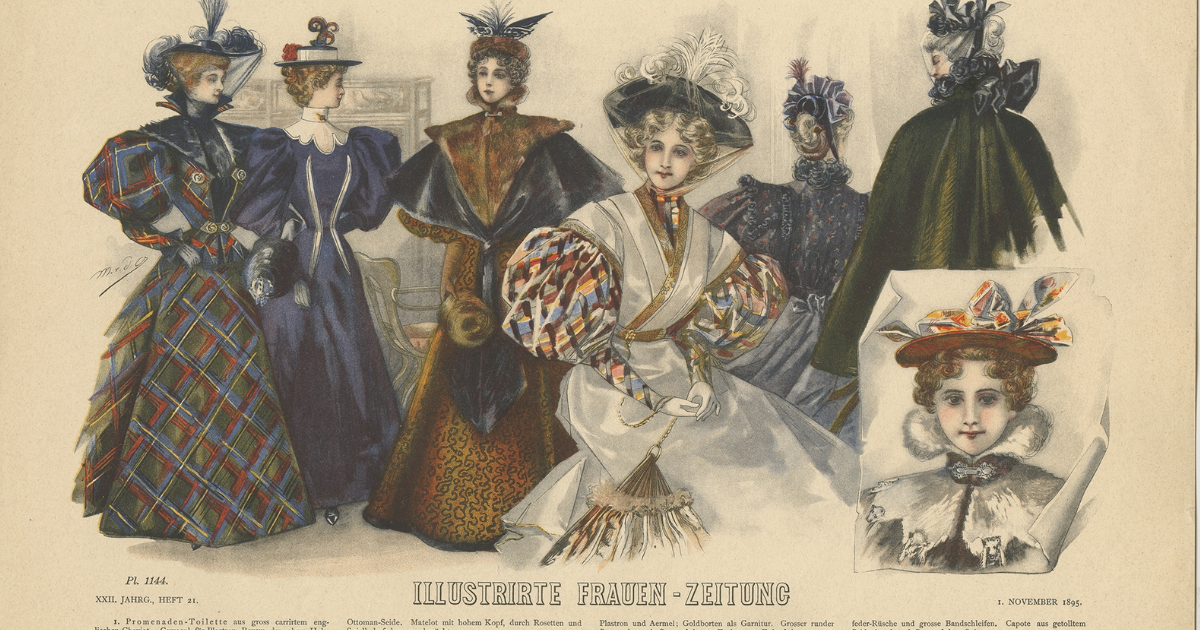
Sometimes, reading these old pages of Grand Island history makes me a bit homesick for something I never experienced. The balls, the picnics, the organized tours — all the hallmarks of 19 century community life — advertised in the paper for anyone with a membership and the money to attend. And in this case, a calico dress.
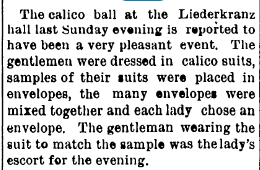
There is a lot packed into this little blurb. But first — don’t you want to go to the next calico ball? Dress up in your cotton suit or dress? And have all the stress of asking someone to dance taken away by a scrap of fabric?
These entries are a fascinating fixture of Grand Island history, and the history of German immigrants. Both the English language and German language Grand Island papers reported on them frequently. “Everyone” was putting them on. The Liederkranz, the Platt Duetsche, and Hann’s Park all advertised their balls. The calico balls in particular seemed to be popular for fundraising events for the poor.
Today, calico seems more like a niche cotton fabric for crafters and sewers. At least in my mind, but maybe that is because my mom used to sell apple head dolls at a little shop called The Calico Cat. You can’t buy calico garments off the rack. You buy it by the bolt at Hobby Lobby and turn it into a quilt. Back in 1895, however, it was a practical, sturdy kind of fabric for everyday wear, curtains, aprons and children’s clothing. It was sturdy, it came with cute little floral patterns printed on it and it was relatively cost effective.
Normally, you dress in your best silks and satins for an event at the Liederkranz. The calico ball, however, made this more of an egalitarian affair, inviting anyone with a suit or a dress to attend.
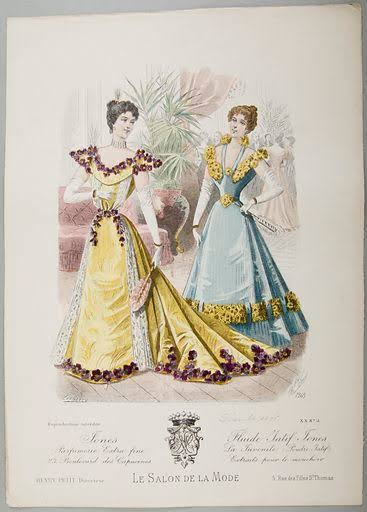
What I love about this little recounting of the calico ball, however, is the underlying assumption that all the suits were hand-made. Why else would you have suit fabric lying around to stick in an envelope so you could find out who you were dancing with? The romantic side of me wonders if there are any scraps of calico left tucked away in a trunk somewhere, inherited from a great-grandmother who kept the calico swatch from her very first dance.